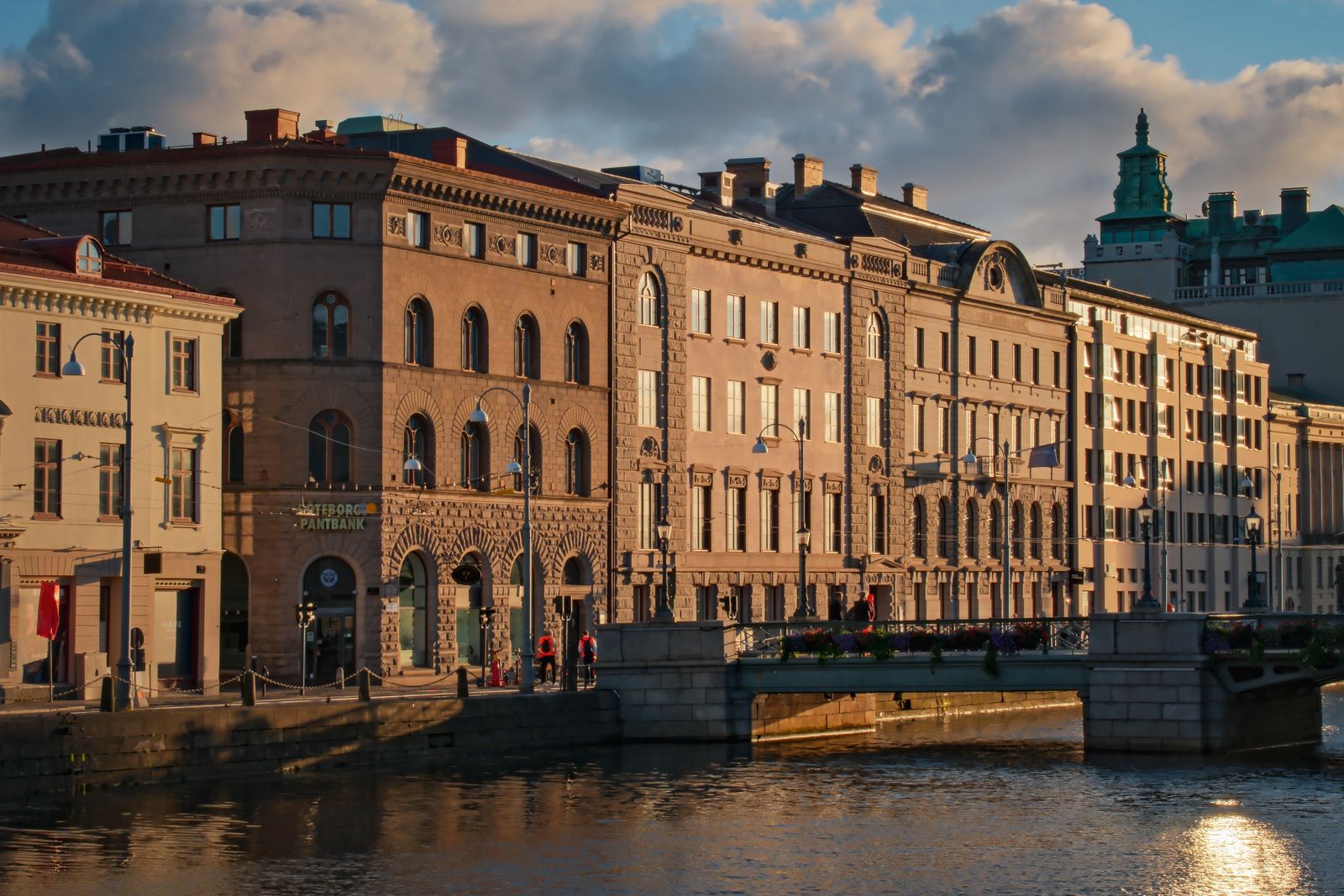
Sweden’s second city is friendlier, smaller and saltier than the capital, a harbour town where canals, leafy avenues and a working fishing port sit side by side. Gothenburg, spelled Göteborg in Swedish, is the gateway to a rugged west coast of fishing villages, oyster beds and bare granite islands. Here is what to see in the city and along the coast.
The city of Gothenburg
Gothenburg was founded in the seventeenth century with the help of Dutch engineers, which is why a ring of canals still threads through the centre. Take a Paddan canal boat tour to see the city from the water, then stroll the grand boulevard of Kungsportsavenyn, known simply as Avenyn, lined with cafes and restaurants. The district of Haga, with its wooden houses and cobbled lanes, is the place for a long fika and a famous oversized cinnamon bun.
The fish market and harbour
The Feskekôrka, literally the fish church, is a market hall shaped like a Gothic chapel where the city’s love of seafood is on full display. Gothenburg sits at the heart of Sweden’s seafood coast, and a meal of fresh prawns, mussels or oysters here is a highlight in itself. Down at the harbour, the maritime history of this shipbuilding city is told at the floating Maritiman museum.
Liseberg amusement park
One of the most popular attractions in Scandinavia, Liseberg is a much loved amusement park in the middle of the city, with classic wooden roller coasters, gardens and, in winter, one of Sweden’s grandest Christmas markets. It is a fine outing for families and thrill seekers alike.
The west coast and Bohuslän
North of the city stretches Bohuslän, a coastline of smooth pink granite, sheltered coves and red fishing huts. It is one of the most beautiful drives or boat trips in the country.
Marstrand
A car free island town crowned by the seventeenth century Carlsten fortress, Marstrand is a sailing capital with swimming rocks and seafood restaurants, easily reached from Gothenburg.
Smögen and the fishing villages
Further north, Smögen is famous for its long wooden boardwalk lined with old boathouses turned shops and cafes. The surrounding villages of Fjällbacka and Grebbestad are at the centre of Sweden’s oyster and shellfish industry, and Grebbestad supplies most of the country’s oysters.
West coast highlights
- City: Haga, the fish market and Liseberg
- Islands: Marstrand and the southern Gothenburg archipelago
- Coast: Smögen’s boardwalk and the Bohuslän fishing villages
- Taste: west coast prawns and Grebbestad oysters
Getting there and around
Gothenburg is about three hours from Stockholm on a fast SJ train, making it an easy addition to any itinerary. Local ferries serve the southern archipelago, which, unlike the Stockholm islands, is largely car free and reachable on the city transit pass. To plan rail connections and timing, see our guide to planning a trip to Sweden. For the official city guide, visit Göteborg.com.